
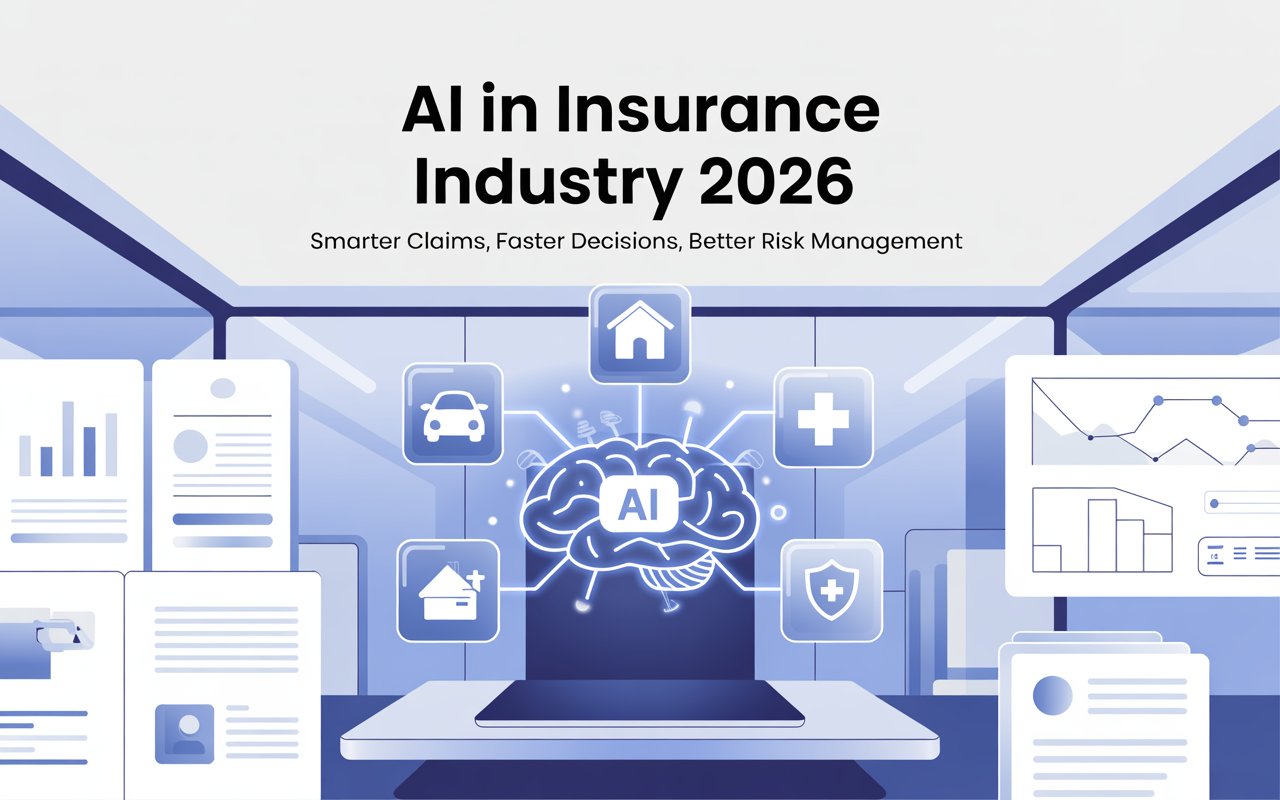
The AI in insurance industry 2026 is no longer just a trend people talk about. It is already shaping how insurance companies work, how claims are handled, and how customers interact with providers. From faster claim approvals to more accurate pricing, artificial intelligence is helping insurers reduce delays and improve service in ways that were difficult a few years ago.
At the same time, customers now expect quick answers, simple processes, and fair pricing. Insurance companies are using AI to meet these expectations while staying competitive. Whether it is a small agency or a large provider, the role of AI is becoming central in daily operations. This guide explains how AI is changing the insurance sector and what it means for businesses and policyholders.
What is AI in the Insurance Industry?
Artificial intelligence in insurance refers to the use of smart systems that can analyze data, learn from patterns, and make decisions with minimal human input. These systems include machine learning, predictive analytics, and automation tools.
In simple terms, AI helps insurance companies work smarter. Instead of relying only on manual processes, insurers can now use data-driven tools to improve accuracy and speed. This is why machine learning in insurance and insurance automation using AI are becoming common across the industry.
Key Benefits of AI in Insurance
AI is not just about technology. It brings real value to both companies and customers. Here are some of the main benefits of AI in insurance:
Faster Claims Processing
One of the biggest improvements is in AI in insurance claims processing. Claims that once took weeks can now be reviewed and approved in hours. AI systems can check documents, analyze damage images, and verify details quickly.
This reduces waiting time for customers and lowers workload for staff. It also helps companies handle a higher number of claims without delays.
Improved Accuracy in Risk Assessment
AI allows insurers to analyze large amounts of data. This leads to better AI in risk assessment insurance. Companies can assess risk more accurately and offer fair pricing based on real data instead of general assumptions.
Better Customer Experience
AI-powered chatbots and virtual assistants are improving AI in insurance customer service. Customers can get instant answers to their questions without waiting for a human agent.
These tools are available 24/7, making the experience smoother and more convenient.
AI Use Cases in Insurance Industry
The AI use cases in insurance are growing every year. Below are some of the most important areas where AI is making a difference.
AI in Underwriting
AI in underwriting insurance helps companies evaluate applications quickly. Instead of manual checks, AI systems review data such as medical history, driving records, and financial details.
This speeds up the approval process and reduces human error. It also helps insurers offer personalized policies based on individual profiles.
Fraud Detection with AI
Fraud is a major concern in the insurance sector. AI helps solve this problem through AI fraud detection in insurance.
AI systems can identify unusual patterns in claims and flag suspicious activities. This helps companies prevent losses and maintain trust with customers.
Personalized Insurance Policies
AI enables insurers to create policies that match individual needs. By analyzing customer behavior and data, companies can offer plans that are more relevant and affordable.
This level of personalization was difficult to achieve before AI tools became available.
AI Trends in Insurance Industry 2026
The AI in insurance industry trends for 2026 show that technology will continue to play a bigger role in shaping the future.
Growth of Predictive Analytics
Predictive analytics in insurance is becoming more advanced. Companies can now predict risks, customer behavior, and future claims with better accuracy.
This helps insurers plan ahead and reduce uncertainty.
Increased Use of Automation
Automation is reducing the need for manual work. From policy management to claims handling, AI-driven systems are improving efficiency across all areas.
This also allows employees to focus on more important tasks that require human judgment.
Rise of Insurtech Innovation
Insurtech innovation is driving change in the industry. New startups and digital platforms are using AI to offer faster and simpler insurance services.
Traditional companies are also adopting these technologies to stay competitive.
Challenges of AI in Insurance
While AI offers many benefits, it also comes with challenges.
Data Privacy Concerns
AI systems rely on large amounts of data. This raises concerns about how customer information is collected and used. Companies must follow strict data protection rules to maintain trust.
Risk of Bias
AI systems can sometimes produce biased results if the data used is not balanced. This can affect pricing and decision-making. Insurers need to ensure fairness in their AI models.
Dependence on Technology
Over-reliance on AI can be risky. Human oversight is still important to handle complex cases and ensure accuracy.
The Future of AI in Insurance Industry
The future of AI in insurance industry looks promising. As technology improves, AI will become more accurate and easier to use. Companies will continue to adopt AI tools to improve efficiency and customer service.
For insurance brokers and agencies, this means new opportunities to grow their business. Using AI tools can help them generate leads, manage clients, and offer better services.
At the same time, customers will benefit from faster processes, fair pricing, and personalized coverage. AI is not replacing humans in insurance, but it is helping them work better and deliver more value.
Final Thoughts
The AI in insurance industry 2026 is shaping a smarter and more efficient future. From claims processing to fraud detection, AI is improving every part of the insurance journey.
For businesses, adopting AI is no longer optional. It is becoming a key factor in staying competitive. For customers, it means better service, faster responses, and more accurate policies.
As AI continues to grow, the insurance industry will keep changing. Companies that adapt early will be in a stronger position to succeed in the years ahead.