
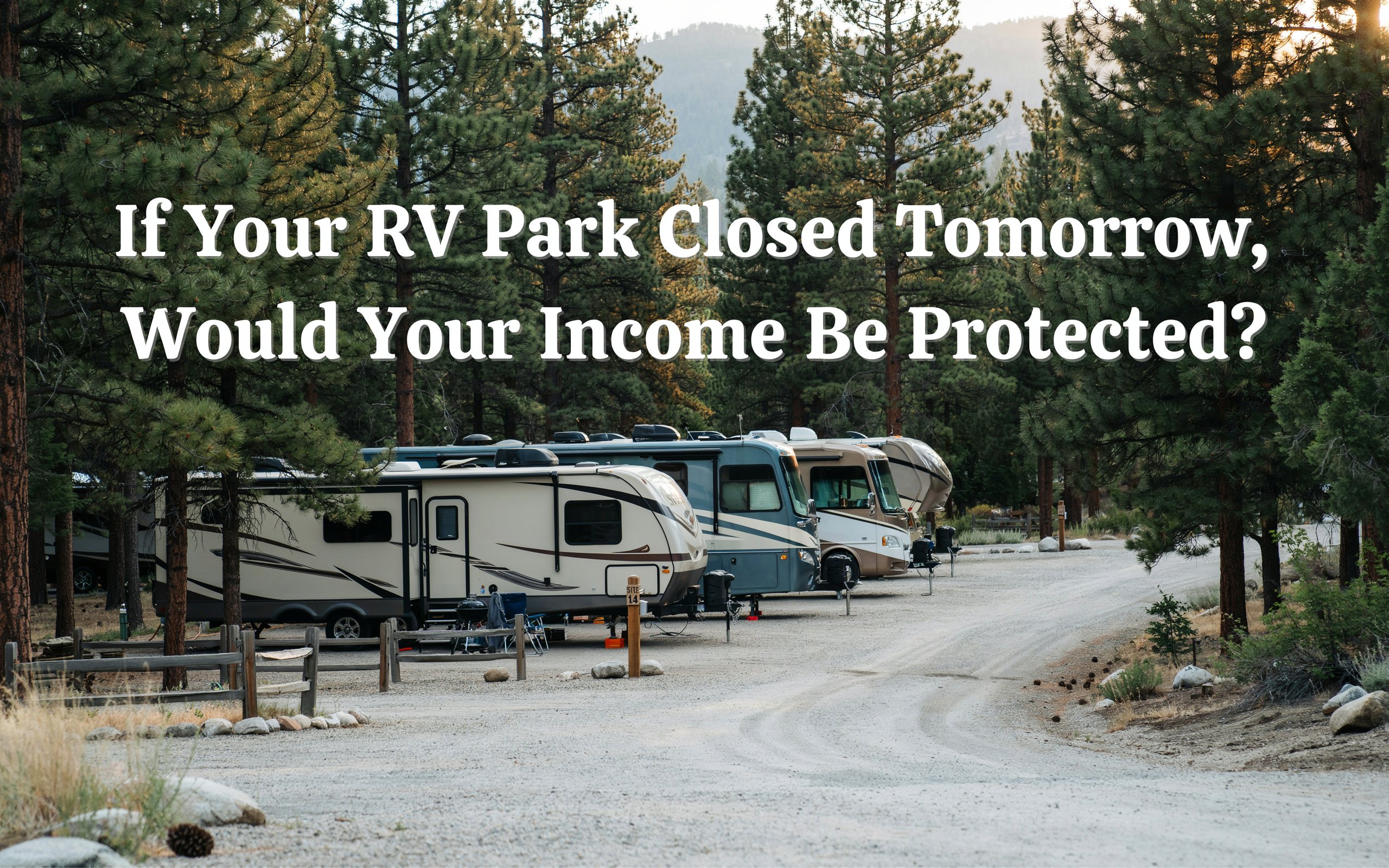
Picture this. It’s the second week of July, your park is fully booked, and a wildfire forces the only access road to close. Guests cancel. New bookings stop. Your park sits empty for sixteen days during the busiest stretch of your year. The damage isn’t to your buildings; it’s to your bank account. This is the exact gap that business interruption insurance for RV parks is built to fill, yet it’s one of the least understood parts of a campground insurance policy.
Most owners buy property and liability coverage without a second thought, but business interruption gets treated as a small add-on instead of a core part of their protection. That’s a mistake, because a closure during peak season can cost more than a slow month ever would. Below, we’ll walk through exactly what this coverage pays for, what it usually leaves out, how a claim actually plays out, and the specific numbers you should be checking on your policy right now.
What Business Interruption Insurance Actually Pays For
This coverage replaces income you lose when a covered event forces your park to shut down or limits how many guests you can serve. It typically pays for:
- Lost net income based on your park’s normal earnings
- Fixed costs that don’t stop, like loan payments, property taxes, and insurance premiums
- Payroll for staff you keep on, even with no guests checking in
- Extra expenses needed to reopen faster, such as temporary power or equipment rentals
It’s added to your commercial property policy rather than sold on its own. For a broader explanation of how this coverage works across different industries, our guide on business interruption insurance covers the basics in plain terms.
What It Usually Does Not Cover
This is where owners get caught off guard. Most policies exclude:
- Closures with no physical damage to your property, unless you’ve added civil authority coverage
- Flood damage, unless you’ve purchased a separate flood endorsement
- Income lost from poor weather alone, like a rainy summer with fewer campers
- Losses during your off-season, since your “normal income” baseline is already low
Knowing these gaps matters more than knowing what’s included. A park near a forest or river faces real risk from events that a standard policy might not touch.
Why Timing Changes Everything for RV Parks
A factory or retail store earns money fairly evenly across the year. RV parks don’t. Most of your income lands in a five to seven month window. That changes how this coverage needs to be built for you.
A Real Numbers Example
Say your park earns $180,000 in July and August combined, but only $20,000 across November through February. A two-week closure in July could cost you close to $20,000 in lost income. The same two-week closure in December might cost you under $2,500. If your policy was set up using your yearly average instead of your peak months, you could be underpaid by tens of thousands of dollars exactly when you need the money most.
Civil Authority and Wildfire Risk
Many RV parks sit near forests, rivers, or coastlines, which makes them more exposed to wildfire smoke, road closures, and evacuation orders than the average business. If a wildfire closes the highway leading to your park but your buildings aren’t touched, standard business interruption coverage may not pay out. You need civil authority coverage added specifically for this. Ask your broker directly whether it’s already included.
How a Business Interruption Claim Actually Works
- Report the loss quickly. Most policies require notice within a set number of days after the event.
- Document everything. Photos of damage, booking cancellations, and emails from guests all help support your claim.
- Provide financial records. Insurers compare your past income to what you earned during the closure. Keep clean monthly records for at least the past two years.
- Wait out the waiting period. Most policies have a 48 to 72 hour waiting period before payments start, so short closures may pay out less than you expect.
- Work with an adjuster. They’ll calculate your lost income, ongoing expenses, and any extra costs tied to reopening.
Clean financial records make this entire process faster and reduce disputes over how much you’re owed.
A Quick Checklist Before Renewal
- Have you reviewed your coverage limit in the last 12 months?
- Does your policy use your peak season income, not a yearly average?
- Do you have civil authority coverage for road closures and evacuations?
- Is flood damage included, or do you need a separate endorsement?
- Do you have at least two years of clean financial records on hand?
If you answered no to any of these, it’s worth a call to your broker before your next renewal date.
Final Thoughts on Protecting Your RV Park
A short closure at the wrong time of year can do more financial damage than a slow season ever would. Business interruption insurance for RV parks only works well when it’s built around how your park actually earns money, not a generic formula. Review your peak season numbers, check for gaps like civil authority and flood exclusions, and keep your financial records current.
If you’re unsure whether your current policy would actually cover a closure during your busiest weeks, talk to a broker who understands seasonal outdoor hospitality businesses. It’s a short conversation now that could protect your entire season later.
Frequently Asked Questions
Is business interruption insurance mandatory for RV parks in Canada?
No, it’s not legally required. General liability insurance is the only coverage most provinces or landlords expect you to carry. Business interruption coverage is optional, but most brokers recommend it for any seasonal business that depends on a short earning window.
How much does business interruption insurance cost for an RV park?
Cost depends on your park’s size, location, peak season income, and the length of coverage you choose. Parks near forests or floodplains usually pay more because of higher wildfire or flood risk. Your broker can give you an exact number once they review your income and property details.
Does business interruption insurance cover wildfire smoke or evacuation orders?
Only if you have civil authority coverage added to your policy. Standard business interruption insurance usually pays out when your property is physically damaged. If a wildfire forces a road closure or evacuation order near your park without touching your buildings, you need this extra coverage to be paid for that loss.
How long does business interruption coverage last after a claim?
Most policies pay out for a set “period of restoration,” which is the time it reasonably takes to repair your property and reopen. This can range from a few weeks to several months, depending on the damage. Some policies also offer an extended period option that continues payments even after you reopen, while your bookings slowly return to normal.
What documents do I need to file a claim?
You’ll need at least two years of financial records, including monthly income statements, tax returns, and booking records. Photos of the damage, cancellation emails from guests, and repair estimates also help speed up the claims process and support a fair payout.
Can I get business interruption coverage if my RV park is only open seasonally?
Yes. Seasonal parks can still get this coverage, but it needs to be set up using your peak season income rather than a yearly average. Tell your broker exactly which months bring in most of your revenue so your coverage limit reflects your real risk.
Does this coverage apply if I close due to low bookings instead of damage?
No. Business interruption insurance only applies after a covered event, like a fire, storm, or flood, causes a closure. A slow season with fewer guests, even during your peak months, is considered a normal business risk and isn’t covered.
How often should I review my business interruption coverage?
At least once a year, ideally before your renewal date. Your income, repair costs, and risks can all change from one season to the next. A policy that worked well two years ago might leave you underinsured today.